
Tools & apps
Connecting Your Junior Golf Apps Into a Usable System
October 14, 2026
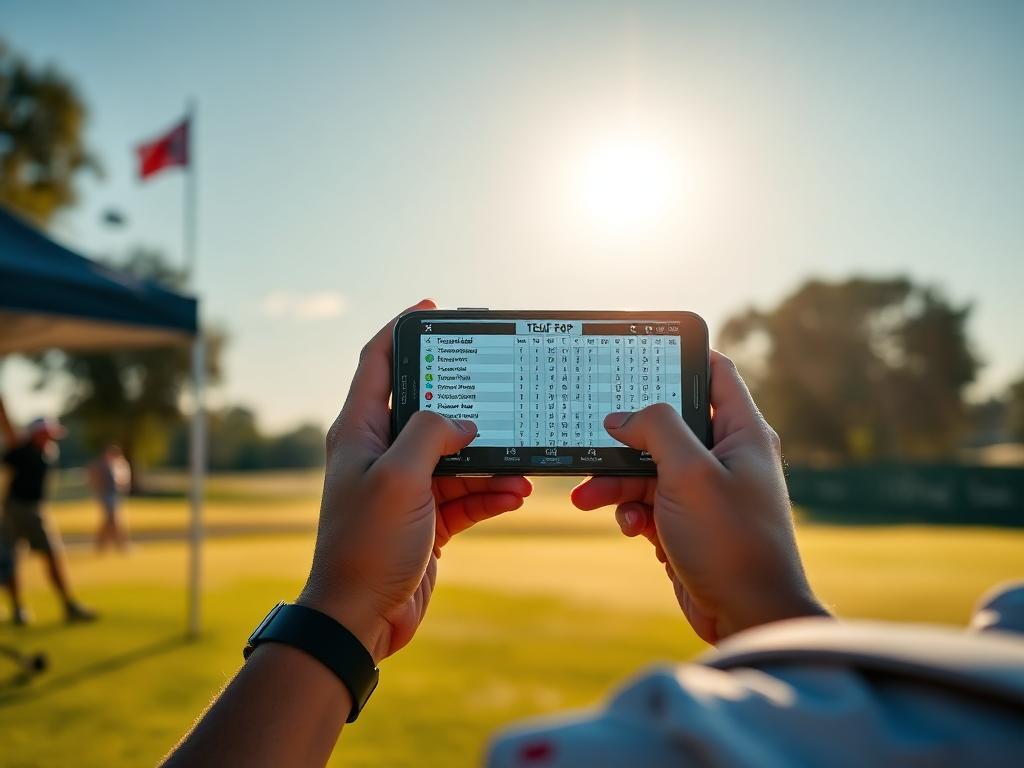
Junior golfers track numbers across leaderboards, launch monitors, and stat apps. Here is how those tools fit together and where critical data gets lost.
Most tournament golfers carry four to six golf-specific apps on their phones. Between tournament management systems, launch monitor software, stat trackers, and GPS tools, players generate massive amounts of data every week.
However, college coaches do not care how many apps you use; they care if you understand your game. When your tools operate in silos, you end up with high launch monitor numbers that do not match your scoring average on BlueGolf.
To build a true performance pipeline, you need to understand what each tool is built to do, where its limits lie, and how to stop losing critical data between them.
What Each Tool Does Well (and Where It Stops)
1. Tournament Portals (BlueGolf, Golf Genius, AJGA)
- What they do well: These platforms are tournament infrastructure. They handle official scoring, pairings, tee times, live leaderboards, and scoring differentials. They are the public record college coaches inspect.
- Where they stop: Tournament portals only capture the final outcome. A round of 74 on a BlueGolf leaderboard tells a coach nothing about why you shot that score. It does not record whether your bogeys came from wild tee shots or poor wedge proximity.
2. Launch Monitors and Simulators
- What they do well: Radar and camera-based monitors isolate club delivery and ball flight mechanics. They deliver precise carry baselines, spin rates, launch angles, and ball speed under controlled conditions.
- Where they stop: Monitor numbers represent optimal conditions, usually off artificial mats or flat practice tees. They do not account for Texas crosswinds, uneven lies, or tournament pressure. A 165-yard 7-iron on a monitor often becomes a 158-yard shot on a firm, breezy fairway.
3. On-Course Stat Logging and GPS Apps
- What they do well: These tools capture real-world execution. They track strokes gained across driving, approach play, short game, and putting relative to scratch or college baselines.
- Where they stop: They rely entirely on player discipline. If you do not tag shots properly or fail to edit your round immediately after signing your card, the data becomes useless noise.
The Three Cracks Where Data Disappears
When players fail to integrate their tech stack, performance data leaks out at three specific friction points:
- The Mat-to-Fairway Yardage Gap: Players build course management strategies around indoor launch monitor carry numbers without adjusting for turf interaction, temperature, and wind. When they miss greens long or short during weekend events, they blame their swing instead of uncalibrated data.
- The Scorecard Trap: Players log only traditional stats—fairways, greens in regulation, and total putts. A green hit to 55 feet is recorded the same as a green hit to 6 feet, masking serious approach dispersion problems.
- The 48-Hour Delay: Entering shot data two days after an event leads to guesswork. If you cannot remember whether a missed approach was 8 yards short-right in the rough or 14 yards pinned against a tree, your strokes gained reports will mislead your practice plan.
The Integrated Weekly Workflow
To keep your data clean and actionable, follow a simple three-step weekly routine:
1. Calibrate on the Range: Use launch monitors once a week to verify your stock carry numbers with every club, recording changes caused by weather shifts or equipment wear. 2. Map the Course: Before competing—whether at the TJGT Fall Series at Austin (Grey Rock Golf Club, Oct 24) or a high school qualifier—use your GPS or yardage book to map target zones based on real carry distances, not simulator maximums. 3. Audit Within Two Hours: Within two hours of signing your scorecard on BlueGolf or Golf Genius, complete your stat logging while shot locations, miss tendencies, and club selections are fresh in your memory.
Next Step This Week
Audit your carry numbers. Spend 45 minutes on a launch monitor mapping your exact carry distance with your wedges and short irons (PW through 7-iron). Write those numbers down in your yardage book and commit to playing those exact yardages during your next competitive round.
Track your own numbers
Log every round hole by hole, import verified tour scores automatically, and send coaches a stat page that stays current.